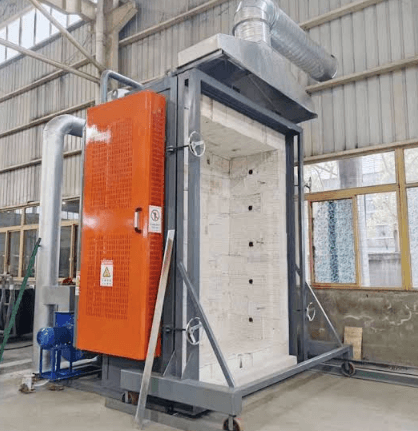
Designing a glass tempering production line requires more than choosing a furnace with a suitable capacity. Manufacturers must consider how raw materials enter the facility, how glass moves between processing stages, how operators interact with equipment, and how finished products are inspected and stored.
A well-planned production line can improve workflow, reduce unnecessary handling, and provide a more organized environment for maintaining product quality.
Begin With Production Requirements
The first step is to understand the products that the factory needs to manufacture.
Important factors include glass dimensions, thickness, expected production volume, product types, and future requirements. These details influence the selection of heating, transportation, cooling, and control systems.
A clear production profile can prevent businesses from investing in equipment that does not match their actual needs.
Planning the Factory Layout
Available factory space can have a major impact on equipment installation.
The production line should provide enough room for loading, unloading, maintenance, operator movement, and material storage. Access to key machine components is also important for inspection and servicing.
A good layout can reduce unnecessary movement and make the overall workflow easier to manage.
Integrating Heating and Cooling
The heating and cooling stages must work together.
Glass needs to be heated under controlled conditions before entering the cooling stage. The production system should therefore provide a coordinated process rather than treating each stage independently.
Operators need access to appropriate controls and monitoring information throughout the process.
Choosing a Suitable Heating Method
Different heating technologies provide different operational characteristics.
Radiant heating is one approach used in industrial glass processing. Its effectiveness depends on furnace design, heating elements, glass characteristics, and operating parameters.
Manufacturers should evaluate the technology according to the products they intend to process.
Mechanical Transportation
The glass transportation system is another important part of the production line.
Rollers must move glass steadily through the equipment. Proper alignment and maintenance are essential for reliable operation.
Production teams should establish regular inspection procedures to identify wear, contamination, or alignment problems.
Quality Inspection
Inspection should be integrated into the overall workflow.
Depending on the product, manufacturers may inspect dimensions, appearance, shape, surface condition, and other characteristics.
Quality checks can occur at several stages, allowing production teams to detect problems earlier.
Automation and Operator Interaction
Automation can help coordinate complex production processes.
Digital control systems may provide centralized access to machine settings and operating information. This can make routine operation more organized and provide useful production data.
Nevertheless, operators need adequate training to interpret information and respond appropriately.
Managing Production Capacity
Equipment capacity should be matched with realistic production requirements.
A machine that is significantly larger than the factory’s actual needs may increase investment and operating costs without providing practical benefits. On the other hand, equipment with insufficient capacity may become a bottleneck as demand increases.
Capacity planning should therefore consider both current production and anticipated growth.
Energy Considerations
Heating equipment can account for a substantial portion of production energy use.
Manufacturers should examine equipment efficiency, insulation, operating schedules, maintenance, and temperature control when assessing energy performance.
Monitoring consumption over time can help identify opportunities for improvement.
See also: Consumer Technology Trends
Maintenance Access
Maintenance should be considered during the design stage.
Technicians need sufficient access to components that require inspection, cleaning, calibration, or replacement. A production line that is difficult to maintain can create unnecessary downtime.
Manufacturers should therefore discuss maintenance requirements before finalizing the installation layout.
Building a Flexible System
A production line may need to handle changing customer requirements over time.
Choosing equipment with suitable adjustment capabilities can make it easier to process different product specifications. Flexible systems may also simplify future expansion.
Businesses researching equipment for flexible glass processing can review the EASTTEC Radiation Flexible Roller Furnace when evaluating potential solutions.
Frequently Asked Questions
1. What should be considered when designing a glass production line?
Manufacturers should consider product specifications, capacity, factory layout, heating technology, transportation, cooling, inspection, automation, energy use, and maintenance access.
2. Why is factory layout important?
A suitable layout can improve material flow, provide safe operator access, simplify maintenance, and reduce unnecessary handling.
3. Should future expansion be considered?
Yes. Anticipated changes in product range and production volume can influence equipment selection and factory planning.
Conclusion
An efficient glass tempering production line combines appropriate equipment with thoughtful factory planning. Heating, cooling, transportation, inspection, automation, maintenance, and material flow should all be considered as interconnected parts of one system.
By identifying production needs before purchasing equipment and planning for both current and future requirements, manufacturers can build a more practical and adaptable production environment.