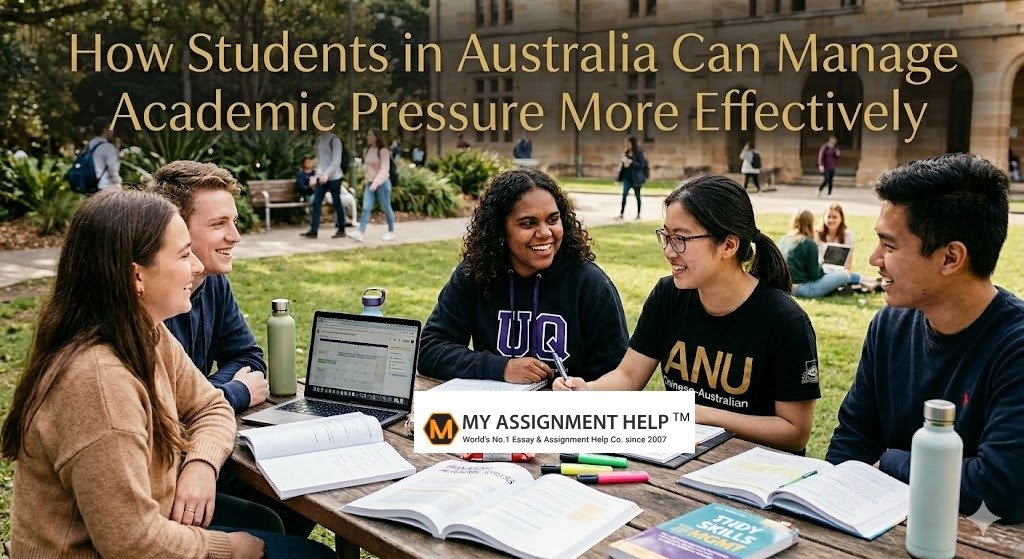
The contemporary Australian educational landscape is internationally renowned for its rigor, innovation, and exceptionally high standards. From the final, high-stakes years of senior secondary school to the demanding lecture theatres of Group of Eight (Go8) universities, students across the nation are consistently pushed to excel. However, this relentless pursuit of academic excellence often brings a heavy, unintended burden: intense academic pressure.
A significant number of senior high school and tertiary students in Australia report experiencing debilitating levels of stress, anxiety, and burnout. The immense pressure to secure top Australian Tertiary Admission Rank (ATAR) scores, maintain GPA requirements for Commonwealth Supported Places (CSP), balance demanding part-time jobs, and navigate an evolving economy can feel completely overwhelming.
Managing this academic pressure is not about lowering your ambitions or compromising your career goals; it is about optimizing your strategic approach to learning. Below is a comprehensive, evidence-based guide on how high school and university students in Australia can effectively manage academic stress, safeguard their mental well-being, and achieve sustainable academic success.
Understanding the Roots of Academic Stress in Australia
To defeat a systemic challenge, you must first understand its origins. Academic pressure within the Australian education system stems from several distinct cultural, institutional, and structural factors that students must navigate simultaneously:
- The ATAR and University Entrance: For senior high schoolers, the Australian Tertiary Admission Rank (ATAR) is frequently framed by schools and media as a make-or-break metric. This creates intense, localized pressure during Years 11 and 12, turning final assessments into high-anxiety events.
- Financial and Work Commitments: With the rising cost of living in major metropolitan hubs like Sydney, Melbourne, and Brisbane, the modern student experience is rarely just about studying. A vast majority of domestic and international students work substantial hours in retail, hospitality, or gig economies alongside full-time academic loads.
- The Leap to Independent Learning: High school provides a highly structured, closely monitored environment. Universities and TAFE institutions, by contrast, demand immediate autonomy. This sudden shift leaves many undergraduate students feeling lost in a sea of long-form research essays, complex literature reviews, and rigorous laboratory reports. Navigating these demanding formats is a common tipping point where Myassignmenthelp can provide the structured guidance needed to bridge the skills gap.
Recognizing that this stress is a structural, systemic challenge—and not a personal failure—is the critical first step toward reclaiming control of your educational journey.
1. Master Managing High School Exam Pressure and University Deadlines
When major deadlines pile up at the end of a semester or term, time feels like it is slipping away. True time management is not merely about writing a superficial to-do list; it is about creating a predictable, resilient weekly structure that accommodates both intensive intellectual work and necessary cognitive rest.
The Power of Reverse Calendaring
Instead of looking at a future deadline and worrying, successful students work backward from the submission date. If a complex 3,000-word research essay is due in four weeks, a fragmented breakdown prevents the paralyzing dread of a looming deadline:
[Week 1] ➔ Complete preliminary literature review & structural outline
[Week 2] ➔ Draft core arguments, data analysis, and body paragraphs
[Week 3] ➔ Write introduction, conclusion, and compile references (APA, Harvard, or AGLC style)
[Week 4] ➔ Execute comprehensive editing, proofreading, and final submission
Implement the Pomodoro Technique
The human brain is fundamentally not wired for unbroken, eight-hour study marathons. Burnout occurs when you attempt to force concentration past cognitive exhaustion.
Instead, utilize the Pomodoro technique: study with absolute focus and zero digital distractions for 25 minutes, then take a mandatory 5-minute break to stretch, hydrate, or step outside. After completing four cycles, reward yourself with a longer 30-minute break. This rhythmic approach keeps your cognitive capacity high and prevents cumulative mental fatigue.
2. Shift from Passive Studying to Active Learning
Spending hours highlighting a textbook, re-reading lecture slides, or staring passively at notes gives a false illusion of competence. This method is passive, highly time-consuming, and emotionally stressful because the information rarely consolidates into long-term memory, leading to severe exam-room panic.
To study smarter and reduce anxiety, pivot entirely to active recall and spaced repetition methodologies:
- Active Flashcards and Quizzing: Use digital tools like Anki or Quizlet to test your memory actively. Forcing your brain to retrieve information strengthens neural pathways far better than passive reading.
- The Feynman Technique: Attempt to explain a complex academic concept—such as macroeconomic theory, legal precedents, or organic chemistry mechanisms—in simple terms to an imaginary audience or a peer. If you struggle to explain it simply, you have instantly identified a critical gap in your knowledge base.
- Timed Practice Papers: For senior high school and university students alike, sitting past exam papers under realistic, timed conditions is the single most effective way to desensitize yourself to exam anxiety and master pacing. This approach is particularly vital when tackling complex, real-world analytical problems; for instance, practicing with dedicated case study assignment help resources can help you learn how to deconstruct dense business scenarios efficiently under time constraints.
3. How to Manage ATAR Stress and Academic Pressure via Support Systems
Many Australian students suffer in silence because they view asking for assistance as an admission of weakness. In reality, leveraging available educational resources is precisely what top-tier, high-achieving students do to maintain their competitive edge.
University and School Support Services
Every major tertiary institution—from the University of Melbourne and UNSW to regional universities and local high schools—offers heavily funded, dedicated academic services designed to assist students:
- Drop-in Writing Centres: Specialized hubs where academic tutors review your essay structure, thesis clarity, and referencing compliance.
- Peer Assisted Study Sessions (PASS): Provide peer-led study groups facilitated by high-achieving upperclassmen who have previously excelled in the exact unit you are currently taking.
- Special Consideration Frameworks: If you experience unexpected illness, acute mental health crises, or severe misadventure, Australian institutions have formal avenues to grant assignment extensions or deferred exams. Do not hesitate to apply when eligible.
External Academic Guidance
When institutional resources are stretched thin during peak assessment weeks, or when university timetables do not align with a student’s work schedule, finding personalized guidance becomes essential. Seeking expert assistance from dedicated academic platforms like Myassignment.services can provide the customized mentoring, structural proofreading, and conceptual clarity needed to master complex marking rubrics. This external pillar of support empowers students to bridge knowledge gaps quickly, directly relieving the paralyzing pressure of overlapping deadlines.
4. Deconstruct the Perfectionist Mindset
A major driver of psychological anxiety among high-achieving high school and university students is perfectionism. The internal belief that anything less than an A+ or a High Distinction (HD) equals total academic failure is psychologically unsustainable.
Embrace a Genuine Growth Mindset
Coined by psychologist Carol Dweck, a growth mindset views challenges, critiques, and poor marks not as a reflection of your underlying intellect, but as invaluable data points for future improvement.
If you receive a Credit (C) or a Pass (P) on an assignment, do not throw it away in frustration. Read the tutor’s feedback analytically. Book a 10-minute slot during their designated office hours and ask directly: “How can I elevate this specific analysis from a Credit to a Distinction in the next assessment?”
Focus on the Process, Not Just the Outcome
You cannot fully control the exact mark an external examiner or university tutor gives your work. However, you can completely control your preparation depth, your research methodology, and your sleep schedule before an assessment. Shift your goals from outcome-oriented statements (“I must get a 99 ATAR”) to process-oriented habits (“I will dedicate four hours of focused, distraction-free study to mathematical methods this weekend”).
5. Optimize Your Physical and Mental Foundations
Your brain does not function in a biological vacuum; it is entirely dependent on your physical well-being. When academic pressure spikes, basic self-care routines are usually the very first things students sacrifice, creating a destructive, downward cycle of physical exhaustion and mental decline.
Sleep is a Non-Negotiable Cognitive Tool
Pulling an all-nighter to cram for a morning exam is mathematically counterproductive. Sleep deprivation severely impairs the prefrontal cortex—the area of the human brain responsible for logical reasoning, working memory, and emotional regulation.
Aim for 7 to 9 hours of quality sleep, especially during heavy assessment periods. Sleep is the precise window when your brain consolidates what you learned during the day into long-term memory storage.
Physical Movement and the Australian Outdoors
Australia offers some of the most spectacular natural environments and public parks in the world. Regular exercise releases endorphins, which act as natural stress relievers.
Whether it is a morning surf, a walk through the local botanical gardens, or an intense session at the gym, stepping away from your desk forces your mind into a “diffuse mode” of thinking. This psychological state frequently helps untangle complex academic problems that seemed impossible while staring at a screen.
See also: How to Plan, Structure, and Launch a Real Estate Company Successfully
6. Establish Healthy Boundaries with Work and Social Media
The modern Australian student faces a unique, constant digital distraction crisis. Scrolling through social media feeds during study blocks splinters your attention span, leading to what cognitive scientists call “attention residue”—where your mind remains partly focused on a post you just saw online while you are actively trying to analyze a complex academic case study.
- Digital Detoxes: Use productivity applications like Freedom or Forest to lock your digital devices during intensive study sessions.
- Work-Study Balance: If you work a casual job, communicate your exam and assessment timetables to your manager at least three weeks in advance. Under Australian Fair Work guidelines, casual employees have the flexibility to decline shifts; protect your core exam weeks fiercely.
7. Know When and Where to Seek Professional Support
Sometimes, academic pressure crosses the line from manageable, motivating stress into clinical anxiety, burnout, or depression. It is absolutely vital to recognize the early warning signs: prolonged insomnia, sudden changes in appetite, persistent feelings of hopelessness, or a total loss of interest in activities you used to enjoy.
Australia has an exceptional, world-class framework for youth and student mental health support that is readily accessible:
- Headspace: The National Youth Mental Health Foundation provides tailored, free, or low-cost support for young people aged 12 to 25 dealing with life stress, health, and study issues.
- Lifeline (13 11 14): A vital, 24/7 crisis support and suicide prevention service for moments of acute, overwhelming emotional distress.
- GP Mental Health Care Plan: Both domestic students and international students (via their Overseas Student Health Cover – OSHC) can visit a local General Practitioner to secure a formal Mental Health Treatment Plan. This plan provides Medicare-subsidized sessions with a registered psychologist.
Frequently Asked Questions
Q.1 What qualifies for Special Consideration at an Australian university?
To successfully apply for Special Consideration, your circumstances must be unexpected, beyond your control, and have a direct, verifiable impact on your ability to complete an assessment. Valid grounds generally include acute medical conditions or injuries, severe mental health crises, family bereavement, unexpected primary carer duties, or sudden technical trauma during an online exam (backed by dated screenshots and IT logs). Routine work demands, general study stress, or poor time management do not qualify. Most institutions require you to apply within three to five working days of the assessment deadline along with an official professional practitioner certificate or legal statutory declaration.
Q.2 How are university grades calculated in Australia compared to high school?
Unlike high school assessments that feed into a raw percentage or scale toward an ATAR ranking, standard Australian university coursework operates on a standardized four-tier passing scale:
- Pass (P): 50%–64%
- Credit (CR): 65%–74%
- Distinction (D): 75%–84%
- High Distinction (HD): 85%–100%
Falling below 50% results in a Fail (F). These grades are translated directly into a weighted Grade Point Average (GPA) or a Weighted Average Mark (WAM) on your official academic transcript, which employers and postgraduate admissions boards look at closely.
Q.3 How can international students access mental health services under OSHC?
International students in Australia have access to mental health support through their mandatory Overseas Student Health Cover (OSHC). If academic stress escalates, you can visit a local General Practitioner (GP) and request a formal Mental Health Treatment Plan. This system allows international students to receive Medicare-subsidized psychology consultations just like domestic students. Additionally, most campus health clinics provide confidential, free short-term counseling services specifically tailored to international student transitions.
Q.4 What are my legal rights as a casual worker balancing exams in Australia?
Under Australian Fair Work guidelines, casual employees have a distinct legal advantage: the flexibility to accept or decline shifts. While you are expected to provide reasonable notice to your employer, you are legally entitled to turn down casual shifts during heavy exam intervals to prioritize your academic schedule. To avoid friction, always map out your assessment timetable and submit your formal unavailability roster to your store or venue manager at least three weeks in advance.
Conclusion: Redefining Academic Success
Your academic journey through the Australian education system should be an enriching experience of intellectual, professional, and personal discovery—not a grueling trial of endurance that breaks your mental well-being.
By implementing structured reverse calendaring, moving toward active recall methodologies, utilizing platforms like Myassignment.services for targeted academic support and fiercely guarding your physical health, you can drastically minimize academic pressure.
Your grades, GPA, and ATAR score are numbers that reflect a specific performance at a single point in time. They do not define your intelligence, your human worth, or your ultimate capacity for a bright, impactful future. Take a deep breath, plan your next step methodically, and remember that professional support is always within reach.
About the Author – Drake Miller
I work as a professional academic content writer at Myassignment.services, creating informative and student-focused content for learners at various academic stages. My blogs cover topics such as assignment support, study planning, research methods, and effective learning strategies. Through clear guidance and practical academic tips, I aim to help students improve their performance, build confidence, and manage educational challenges more successfully throughout their academic journey.