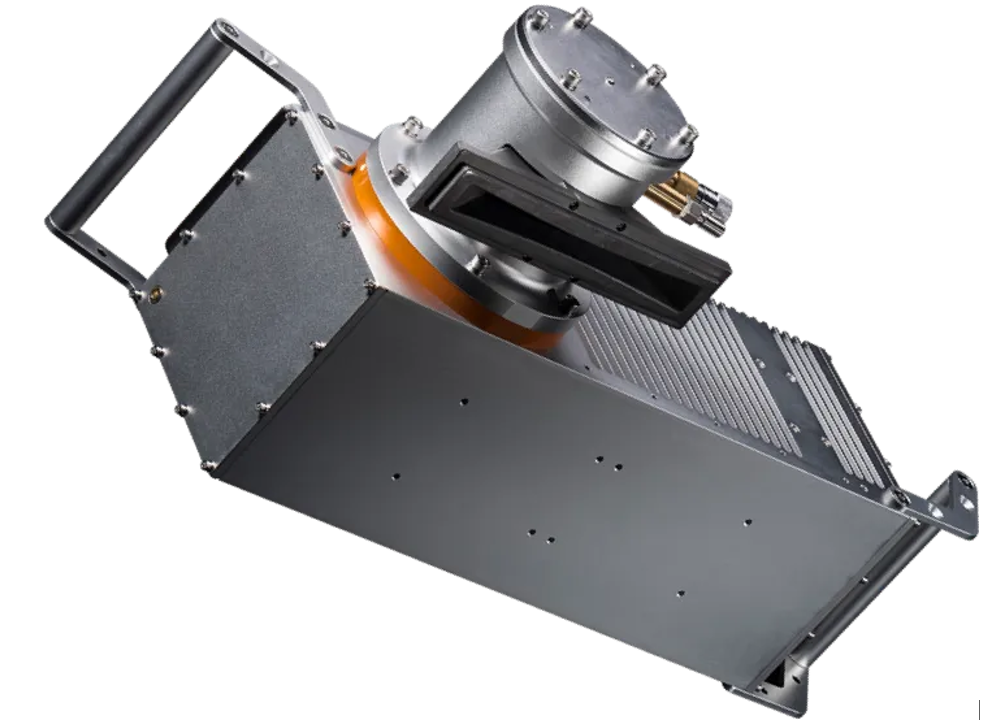
Ask most engineers what defines a good X-ray system. The discussion often starts with the tube, detector, or imaging software. Power architecture rarely gets the same attention. Yet, it can be one of the most important design decisions. The high-voltage power supply does more than energize the tube.
It affects imaging stability, dose efficiency, system lifespan, and overall package size. This is why OEMs evaluating compact X-ray source equipment suppliers increasingly examine power architecture alongside tube specifications. The two are more closely connected than a datasheet may suggest.
Why kV Stability Is the Foundation of Imaging Quality
X-ray generation depends on accelerating electrons across a precisely controlled potential difference, typically ranging from tens to hundreds of kilovolts depending on the application. Even small fluctuations in that voltage, commonly measured as ripple, directly affect the resulting X-ray spectrum’s energy distribution.
Excessive ripple introduces inconsistency in photon energy output frame to frame, which manifests as image noise, reduced contrast resolution, and in CT applications, artifacts that compound across reconstructed slices. A well-engineered power architecture minimizes ripple through careful filtering and regulation design, maintaining kV stability within tight tolerances even under rapidly changing load conditions.
Topology Choices: Cockcroft-Walton vs. Resonant Converter Designs
Two dominant high-voltage generation topologies shape most modern X-ray power architecture. Cockcroft-Walton voltage multiplier ladders, a long-standing approach, use cascaded diode-capacitor stages to step up voltage incrementally, offering straightforward design and proven reliability, though often at the cost of larger physical footprint and slower response to load transients.
Resonant converter topologies, increasingly favored in compact modern designs, achieve high voltage generation through high-frequency switching and tuned resonant tanks, enabling significantly smaller component sizing, faster dynamic response, and improved efficiency. The shift toward resonant architectures has been a major driver behind the miniaturization of integrated X-ray sources over the past decade, allowing high voltage generators, tubes, and control electronics to be packaged into genuinely compact, OEM-ready units rather than bulky standalone cabinets.
Insulation and Dielectric Design at High Voltage
Power architecture isn’t purely an electrical engineering challenge; it’s equally a materials and insulation challenge. At voltages exceeding 100kV, managing dielectric breakdown risk becomes critical, requiring careful selection of insulating oils, potting compounds, or gas-insulated designs depending on the voltage class and application environment.
Poor insulation design doesn’t just risk component failure; it introduces corona discharge and partial discharge phenomena that degrade output stability over time, even before catastrophic failure occurs. This is a major reason why high-voltage generator reliability can’t be evaluated purely on electrical specifications alone; thermal and dielectric design margins matter just as much for long-term field performance.
How Power Architecture Affects Dose Efficiency
For medical and security applications in particular, power architecture directly influences radiation dose efficiency, how much useful imaging signal is generated relative to patient or operator radiation exposure. Fast-responding power supplies that can precisely modulate output allow for pulsed or gated exposure techniques, delivering radiation only during the exact imaging window needed rather than maintaining continuous output. This capability, dependent entirely on the underlying power architecture’s response speed, can meaningfully reduce total dose in applications like dental CBCT or bone densitometry without compromising image quality.
Thermal Management as a Power Architecture Concern
High-voltage generation produces significant heat in the power supply and X-ray tube. Most input energy at the tube anode becomes heat rather than X-ray photons. This makes thermal design important for compact X-ray source equipment suppliers. Effective systems use forced air, liquid cooling, or oil-based heat transfer to control temperatures. Poor thermal design can reduce performance, cause derating, and shorten component life during continuous industrial imaging.
Key Power Architecture Considerations for OEM Integration
A few architectural factors consistently matter most when evaluating power supply design for OEM integration:
- Voltage and current scalability, ensuring the architecture supports the full range of imaging applications a product line might need to address.
- Response time under variable load, critical for applications requiring rapid exposure changes or pulsed operation.
- Footprint and integration compatibility, particularly for compact, robotic, or portable system designs.
- Long-term output stability, maintaining consistent kV and dose output across years of field operation without significant recalibration.
- Compliance and safety margins, meeting relevant regulatory and radiation safety standards across target markets.
Why This Matters More as Systems Get More Compact
The broader industry trend toward smaller, more integrated X-ray systems, driven by demand for portable security scanning, compact industrial NDT tools, and space-constrained medical imaging equipment, has placed increasing pressure on power architecture innovation specifically. Packing reliable, stable high-voltage generation into a dramatically smaller footprint without sacrificing performance requires genuinely sophisticated engineering, not simply scaling down existing designs.
This is exactly why power architecture expertise has become such a meaningful differentiator among equipment suppliers, since achieving true miniaturization without compromising output stability or dose efficiency demands specialized design capability that not every manufacturer has developed.
See also: How to Plan, Structure, and Launch a Real Estate Company Successfully
Conclusion
Power architecture shapes nearly every meaningful performance characteristic of an X-ray system, imaging quality, dose efficiency, thermal reliability, and physical footprint, making it far more than a background component. OEMs evaluating equipment should weigh power supply design with the same rigor applied to tube and detector selection, since the two are fundamentally interdependent. Ultimately, the quality and sophistication of a system’s High Voltage Power Supplies often determine whether an X-ray product delivers consistent, reliable performance in the field or falls short under real-world operating demands.
VJ X-Ray brings over three decades of high-voltage design experience to this exact challenge, engineering integrated X-ray sources and generators that combine stable kV output with the compact footprints modern OEM systems demand. Their IXS and HVL/HVG product lines reflect this architectural focus, packaging high-voltage power supplies, tubes, and control electronics into reliable, space-efficient units built for continuous industrial and medical use.